
Old William Walking – Excerpt from Rebecca’s Secrets
Tommy befriends a tramp on the bomb site and learns about a family tragedy.
One freezing evening, in mid December, I was coming home from school. It had been snowing for a week and snow was falling now – big soft flakes drifting like feathers in the yellow light of the street lamps. I took a short cut across the bomb site. Covered in snow it was beautiful – the mounds of rubble like little mountains covered in soft untrodden snow.
Over where our camp used to be, I noticed smoke first, then a small fire, and someone squatting in its glow.
I wandered over, thinking it was one of the boys.
As I came close I saw it was an adult. He wore a big overcoat. He had a snow-capped scarf draped over his head, putting his face in shadow.
He had taken over our fireplace – a square of bricks, topped by the grill Davy nicked from his Mum’s electric oven.
He was cooking something in a can, poking it with a stick.
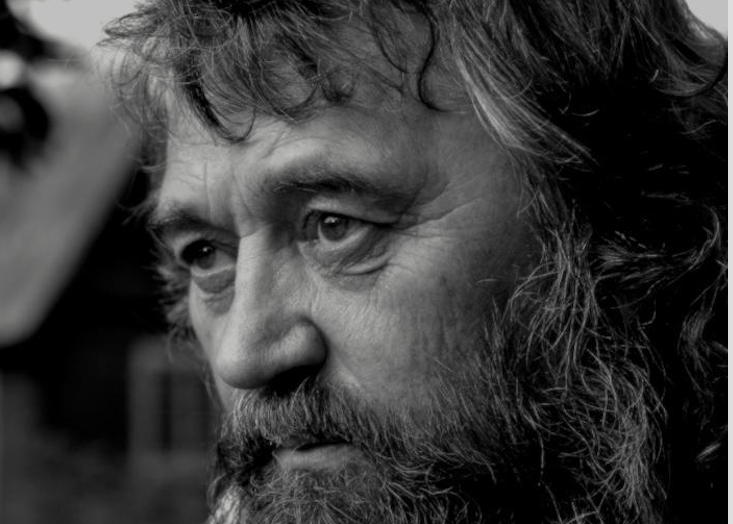
He looked up at me and his face caught the firelight. I knew him. He was the tramp I’d seen on the street. Old William – that’s what we called him, but I am not sure if he was old or just looked old, or if his name was really William.
Kids told stories about him – said he was a dangerous robber and took small children away and they were never seen again. That was rubbish. He never hurt anyone.
“Hello. Who are you?” I asked.
“William”, he said, “and who are you, young man?”
His voice was soft and cultured with no East End accent.
“Tommy. Tommy Angel.”
“Ah, Angel – Engel. You Ashkenazi?”
“Er. I don’t know.”
“Or perhaps you’re a marauding Angle, come over from Jutland to rape and murder and give England it’s name?“
“Sorry?”
”You know in Holland they’d call you Angel if you had the sign of an angel on your door? Do you have an angel on your door.”
“Er, no, we’ve got a knocker.”
“I’m Mankowitz. We came in from Russia.”
“Pleased to meet you.”
He pulled back his scarf. He had long hair, like a woman, but matted and dirty. He had a dark weathered face, deeply wrinkled with sad-lined eyes and a big nose. He had a beard – mostly white like Father Christmas, but brown around his mouth. His lips were cracked with the cold and scabby.
“You live here,” he said, “I’ve seen you.”
“Over there, with my Gran.”
“Brothers and sisters?”
“No.” I said, feeling guilty, because it was a lie. But it would do for now. I thought he didn’t really want to know about my family.
“Why are you here?” I asked.
“How long you got?” He shrugged, raised his bushy brows and smiled. His coat dropped open a little and I saw he was wearing a suit with a fob watch on a chain. I thought it strange that a tramp would wear a suit.
“You gonna sleep here?”
“Oh yes.”
“But it’s freezing!“I’m OK,” he said. “You know what keeps me warm?”
I shrugged.
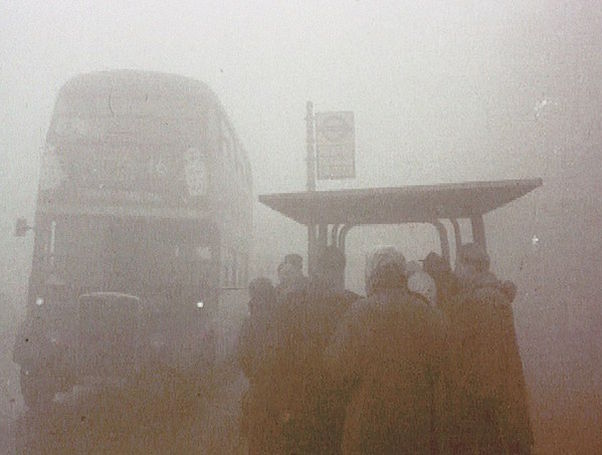
“Well this week it’s the price of coal, the Suez Crisis and the threat of more smog.” He took a newspaper from a pile in front of him, opened it and stuffed it under his arms.
“And then there’s the horses.” he said stuffing more pages, “and the small ads and my favourite – the obituaries.” He chuckled as he wrapped his coat around him.
He poked at his dinner with a stick.“Want some sardines?”
“Hate sardines”
“Everybody does. That’s why they give them to me.”
“Who does?”
“People.”
“People give you food?”
“From where I am,” he said, “you see the best and worst of people. Once I sat on a woman’s doorstep for a rest. She saw me there and brought me a full plate of dinner and a cup of tea. Another time I just leaned against the railings outside a house and a woman poked her head out her bedroom window and told me to piss off. I didn’t move fast enough and she emptied a full piss pot over my head.”
“Errrrghh!” I groaned, “What did you do?”
“Nothing. Just walked away.”
“But weren’t you angry?”
“In the end it’s down to intelligence.”
“What do you mean?”
“Stupid people live in fear and clever people live in love,” he said. “But they’re not good or bad – they’re just people, and you can’t blame people for being people anymore than you can blame dogs for being dogs; cats for being cats; rats for being rats. You can’t change them either – you have to accept them for what they are and forgive them.”
“Forgive them for what?”
“For everything. For living, for dying, for getting in your way and making you miserable, for making promises and breaking them, or for making you happy and leaving you.”
“Why are you here?” I asked again. “
Somewhere to rest for the night.” He smiled and looked away at the fire. He spoke with finality, as if the conversation was finished and he expected me to walk away. But I was curious and I thought if I had secret stories of lost sisters and letters from my mother, then perhaps he had more to him than just being a tramp.
“But… why are you here… sleeping on the debris? Why don’t you go to the Sally Army or go home to your family?”
“I went to the Sally once.” he said, “But they make you sing hymns before you get your breakfast and it’s full of smelly old tramps.”
He smiled again and nodded towards the vacant orange box by the fire. I was a bit frightened to sit with him in the darkness, but I dropped my satchel, brushed the snow from the box and squatted opposite him, close enough to see his pitted teeth and smell the stale urine and sweat wafting from under his big coat whenever he moved.
“And I don’t have a home.” he said.
“Why not?”
“My family’s gone.”
“Where did they go?”
He searched my face, to see if I really wanted to know. I must have passed the test. He smiled a little. I nodded and shifted position, sitting square in front of him, leaning forward elbows on knees, hands warming over the fire, so I could hear every word.
“I wasn’t always like this.” he said, “When I was young I was a teacher at London University.”
I sat up, half amazed half incredulous.
“My subject was philosophy. I gave lectures about Wittgenstein, Aristotle and Descartes – ‘I think, therefore I am.’” He said, “That means we make our own world and everything that happens in it. Do you believe that, Tommy?
”How can that be? I thought, Did Poor Dead Katy make herself fall ill and die? Did Uncle Louis make the Germans kill him? Did Uncle Sammy and Uncle Solly make the war happen? Did I bring Carol’s photo to me? Did my mother rape herself? Did she make Frank beat her? Did my sisters make Gran send them for adoption? Did I decide to be born in this family?
“Don’t know.” I said. “What happened to you?”
He told me he was very successful. He was respected in the university and he did very well. He became a full professor when he was thirty-nine and earned good money. He said at the end of the war, he bought a big house in Woodford Green, with a lovely garden and antique furniture and paintings in every room. He had a lovely wife called Ruth who was a classical pianist.
I’d seen the big houses in Woodford Green when I’d cycled into the Forest. They were beautiful. They were painted white with beams criss-crossing the walls. They stood in gardens so big they had whole trees – lots of them and ponds big enough to swim in. Granddad said you’d have to collect the rent from everyone in Eric Street to pay the rent for one of those houses. William said he bought his house. I didn’t know you could buy a house.
He dug under his coat, into his suit and brought out a tiny photograph. He offered it to me. It was one and a half inches square, cracked and faded and out of focus, but in the light from the fire I could make out a man, a woman and a girl – about fifteen.
“That’s her.” he said, “Naomi. Like in the bible – Ruth and Naomi. They were so close – not like mother and daughter – more like sisters.
I knew the story of Ruth. I’d made it into a paper plane.
“A shayna maidel.” He said.
“What is that?” I asked.
“Naomi – a pretty girl.” He said, “But I lost her. I lost them both.”
He told me Naomi had her father’s intelligence and her mother’s artistic talent and good looks. He said she was beautiful and full of life.
“But, you know, Tommy, you can have everything and then life can change in a heartbeat.” he said. “Do you understand that?”
I thought how life at Gran’s had been exactly the same for years. Gran, Granddad and Vinny had always lived at 90 Eric Street. The house had never changed – it was always old and damp and dirty. All the men in the family had the same jobs all their lives. Granddad and Vinny went to work and I went to school every day and had the same teachers for the same lessons. Weekends were the same with Saturday morning pictures and the family round in the evening, with the same jokes, stories and rows every week. Sundays we always had the big dinner and Granddad slept on the sofa. Nothing had changed for years. And then…
“Well?” he asked.
Suddenly every heartbeat moment popped into my head “Yes” I gabbled, “I’ve had lots of heartbeats. Like when the sun cut the street in half and Mrs. Levy said God would punish me and I knew he wouldn’t and when I found the photo in the airee and when I saw Poor Dead Katy and when I found out I had a sister – two sisters, and when I found Aunt Hannah was my mother and then she wasn’t and when Aunt Marlene put the letters in my hand and when I burned down the camp!”
William smiled. “Oh my! I see you do understand. Do you want to tell me about it?
But I didn’t want to tell my story. I was more interested in him. “Did you have a heartbeat?” I asked.
“Yes.” He said, “My Naomi had been complaining of headaches. Ruth had known about it for some time, but they were so close, those two, they kept it between them. It was their secret. One day I went up to her room to see if she wanted help with her homework and she was sitting on the edge of the bed, with her head in her hands, crying with the pain.
“She said she didn’t want to bother me about it – me being so busy at work. She said I’d have made a big fuss and dragged her off to the doctors and it was really nothing just a headache.
“We were sitting together a few evenings later. Naomi asked if I’d walk her to her friend Sarah’s birthday party and walk her home when it finished. I knew she was scared of the dark, and I teased her. I said she was a big girl now and should walk by herself. Sarah only lived around the corner. She knew I was joking.
“I asked if she had a present for Sarah and she began to tell me ‘I’ve got her…’ In the middle of the sentence, she just stopped and stared straight ahead. I looked to see what she was staring at. It was the clock on the mantelpiece.”
“She stared without blinking. Ruth and I spoke to her. She just stared. I touched her and she didn’t move.”
He looked into the fire.
“She was gone” he said, “It was like she had been switched off. Nothing. We found out later it was a brain tumor, but at the time we didn’t understand. Ruth screamed and screamed and didn’t stop until the ambulance turned up.”
William fell silent. I stared at him. No one had ever told me something real about themselves before. My Aunts told me about Sylvie, but not about anything that happened to them. My Uncles told stories about the war, but they didn’t say what really happened. Gran and Granddad never spoke about their lives – no one did.
It was awesome, frightening, exciting and at the same time embarrassing because I didn’t know what to say.
The snow had melted through my trousers and pants. My bum was freezing.
“Are they done?” he asked.
“What?”
“The sardines. They smell right, but I can’t see so well. Cataracts. It’s all like… fog. Gets worse every day. I’m going to need a white stick.”
“Yes. Yes – they look done.” I said. He slid the can out of the flames and continued.
“They took Naomi to hospital, but it was too late. She was gone – just her body left there like an empty house with no one home. They said they could have done something if we’d caught it sooner. They kept her alive, but she didn’t come back. In ten days we buried her.”
I couldn’t imagine what it would be like to lose someone you loved so much. I had never lost anyone. I had no sisters, mother or father, but I didn’t lose them – I never had them in the first place.
“After that, Ruth was quiet. She stopped talking – to everyone, including me. I think it was the guilt. I told her if she hadn’t kept it a secret, I’d have called the doctors sooner and we might have saved her.
“I went back to work at the university. Life goes on – that’s what I thought, but one night I came home from work and she wasn’t there. I called her but there was no reply. I ran upstairs and there she was on the bed – pills all over the counterpane and a bottle of gin – nearly empty. She was gone.”
I looked at the tiny photo. The man was William when he was a teacher. The woman was dead and so was the girl. I gave it back.
“You know, Tommy, it wasn’t the tumour or the pills that killed them”, he said.
“What was it?”
“It was the secret. It killed them both, don’t you see?”
“Yes.” I could see – sort-of.
“Secrets are dangerous.” he said, looking straight into my eyes, like he knew my life was full of secrets. I was too scared to say anything.“Every family has secrets, Tommy.” he said, and he lightened up a little and put on a spooky voice like Boris Karloff,
“There’s places where no one should be and photos that no one must see. Names that should never be said and letters that mustn’t be read. Feelings that no one will show and secrets a boy mustn’t know.
“There! A Poem for Tommy by Prof. William Mankowitz, 1956.” He ended with a half-bow and a smile.
I was embarrassed. It was as if he knew everything that had been happening to me, everything I was thinking. Suddenly I felt terribly guilty and, for the first time, a bit frightened of this strange old man.
“What did you do next?”
“Well. I had nothing, Tommy. No wife, no daughter. Nothing. No matter how much I cried, Tommy, I couldn’t bring them back.”
That was the first time I had heard a man talk about crying. He stared ahead, focused on something far away.
“So I put on my coat and my boots and I walked.” He said.
Like Tommy Isaacs, I thought.
“I walked away from my empty house and my meaningless work. I walked out, Tommy, and after eleven years I’m still walking.”
Eleven years – that’s all my life – he’s been walking all my life.
“Do you know Tommy Isaacs?” I asked. The question popped out too fast for me to stop it. Immediately I felt stupid – why would he know him – why would he care?
“Tommy? Used to live right here on this very spot where we’re having our little picnic.”
“Yes,” I said, “He went walking.”
“I know – lost his wife and babies. But he’s not walking anymore.”
“What’s he doing now?” “Nothing. He’s dead. God rest his soul.”
I stared into the fire. I wanted to ask about Tommy – how he died, but I didn’t want to distract William.
“They pulled him out of the canal a couple of weeks ago. No one knows what happened, but there are only three possibilities. Either he fell, he was pushed or he jumped. Anyway he’s dead.
“How do you live?” I asked.
“That’s easy.” He smiled, “All a man needs to do is eat and drink and find somewhere warm to sleep, like my room here!” He gestured towards the makeshift tent he’d made from two of our doors.
“I eat what people don’t want. They throw it away – the markets, Billingsgate, Spitalfields, Roman Road – there’s plenty to eat – good stuff. What I drink comes free from taps. I sleep in places other people have left.”
“What will you do?” I asked.
“I’ll keep on walking… until I find it.”
“Find what?”
“What every philosopher has searched for since the beginning of time, Tommy… The reason… The reason why.”
I said I didn’t understand. Did he mean the reason why his daughter died or why his wife took the pills or why he was going blind? Did he want to know why, if God existed, He allowed bad things to happen – like mothers leaving and babies dying and people going to war?
“Oh no, Tommy.” he said, “I spent years trying to find the reason why bad things happened and why they happened to me. At first I blamed myself for thinking it and making it happen – Descartes, remember? But now I know there’s no reason behind anything. It just happens and it happens in a moment. One minute you have a family. The next minute you don’t. That’s just life.
Yes, one minute I didn’t have a family and now I do.
“I want to find another reason. When you have nothing – no family, no home, no work, no philosophy, nothing that matters, nothing to justify your existence or reward your efforts – what is the reason to carry on?”
I was afraid he might stop walking and die like Tommy Isaacs. Although I knew it wasn’t appropriate – I could think of nothing else to say or do – I reached in my pocket for what was left of my spending money. “Can I give you something?” I asked, holding the coins in my palm.
“Not that. I wouldn’t know what to do with it.”
“What can I give you then?”
“You gave it already”
“What?”
“The only other thing a man needs in this life,” he said, “after food, water and a warm fire.”
“What’s that?”
“A friend to talk to now and then.”
“You must talk to lots of people, when you’re walking.”
“God bless you, Tommy.” He chuckled. “No one ever comes close enough!” He gave me a big grin and winked.
Under the long hair and the stained beard, the muck and the smell, he was like my Granddad – only William lived on the debris and Granddad lived across the street in a proper house.
“Teatime.” I said, “See you around.” and I left.
Gran was cooking sausage and chips. When she wasn’t looking I pinched a sausage and wrapped it in newspaper. I tiptoed out the door. When I reached the camp, William was gone. I peeped in his tent and he was there – wrapped in his coat and newspapers.
“William!” I whispered.
“Who is it?”
“It’s me, Tommy. I got you something.”
He popped his head out.
“A sausage.”
“Oh heaven” he crooned “Sweeeeeet heaven!”

 Robert hart
Leave a comment